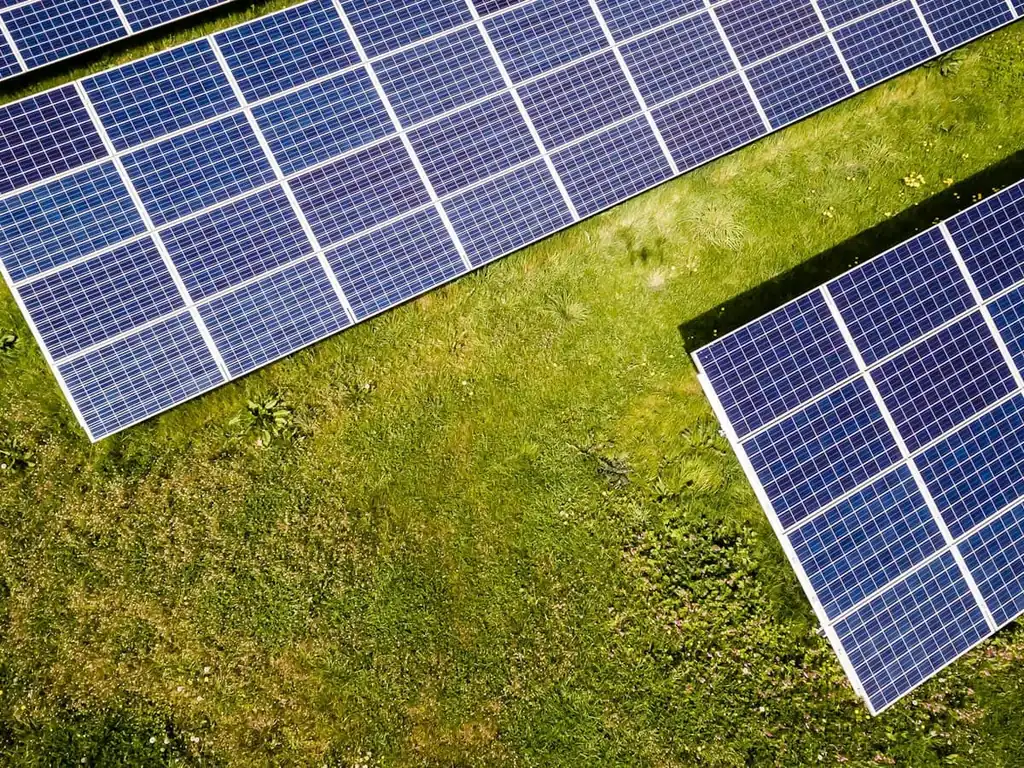
Nearly every solar panel sold for a home in Malaysia today is monocrystalline, and most use TOPCon cells. Bifacial panels collect light on both faces, which helps on open ground more than on a tiled roof. Efficiency, the temperature coefficient and the warranty matter more than the label.
The Panel Types You Will Be Offered
Every solar panel does the same job: light falls on silicon cells and an electric current flows. The types differ in how the cells are made and built into the panel, and in whether the panel has one working face or two.
Here are the names you will meet in a quotation, and what each one means for a house in Malaysia.
Monocrystalline and Polycrystalline
A monocrystalline cell is cut from a single silicon crystal. It looks black, and it makes more power from the same area than any other common cell.
A polycrystalline cell is cast from many small crystals. It looks blue and speckled. It was cheaper to make and was common ten years ago, but it is less efficient, and few makers still offer it for homes.
Today the choice has largely been made for you: nearly every panel sold for a home is monocrystalline.
PERC and TOPCon
These are two designs of the monocrystalline cell. PERC was the standard for most of the last decade. TOPCon is newer and converts a little more light. It also loses a little less output as the panel heats up, which matters on a Malaysian roof at noon.
In InfoLink's ranking of 2025 shipments, TOPCon made up almost 95% of the panels shipped by the largest makers. A PERC panel is not a fault, but ask why it is being offered and at what price.
Bifacial Panels
A bifacial panel has glass on both sides and collects light on its rear face too. The rear face only sees light that bounces off the ground or the roof. On an open frame over a light surface, the gain can be worth having. Flush on a tiled roof, there is almost no reflected light, so the gain is small.
Thin-Film and Solar Roof Tiles
Thin-film panels are light and flexible but make less power per square metre. They are rare on homes.
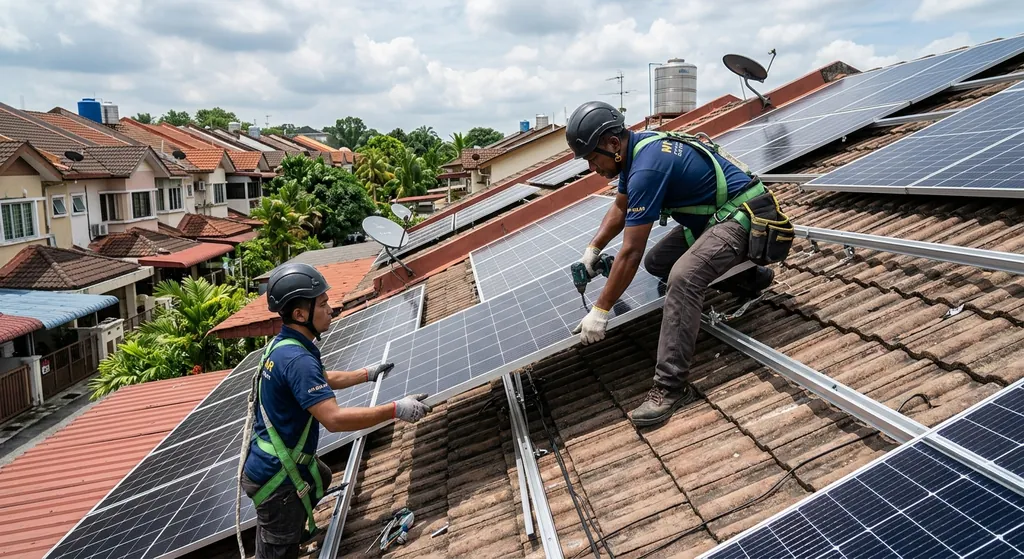
Solar roof tiles replace the roof covering itself. They look like a plain roof, but they cost more per watt than panels on rails, and few installers in Malaysia work with them. SolarKita installs standard panels on an aluminium rail system; our guide to solar panels on different roofs explains how.
What Matters More Than the Type
Once the panel is monocrystalline, four numbers on the datasheet decide more than the label.
| Figure | Why it matters |
|---|---|
| Efficiency | A more efficient panel makes more power from the same area, which counts on a small roof |
| Temperature coefficient | How much output falls as the panel heats up; closer to zero is better in our climate |
| Wattage | Decides how many panels a system needs: a 4 kW system is 8 to 10 panels, an 8 kW system 16 to 20 |
| Warranty | The product warranty covers defects; the performance warranty promises a minimum output after a number of years, often 25 |
Our guide to panel brands explains what "Tier 1" means and names the largest makers.
How to Choose
- Expect a monocrystalline panel, and ask whether it is TOPCon or PERC
- Compare efficiency, temperature coefficient and both warranties on the datasheet
- Ask how many panels the system needs and whether they fit your roof
- Ask who handles a warranty claim in Malaysia
Then compare prices. Our price table shows what a home system costs by size.
Ask Which Panel Is in Your Quotation
WhatsApp SolarKita with your TNB bill. We will tell you which panel we propose for your roof and why, and send you its datasheet.
Frequently Asked Questions
What type of solar panel is best for Malaysia?
A monocrystalline panel with a long warranty and a temperature coefficient close to zero, because Malaysian roofs get hot. Most panels offered for homes today are monocrystalline TOPCon panels.
What is the difference between monocrystalline and polycrystalline solar panels?
A monocrystalline cell is cut from a single silicon crystal and makes more power from the same area. A polycrystalline cell is cast from many crystals and costs less to make but is less efficient. Few makers still sell polycrystalline panels for homes.
Are bifacial solar panels worth it on a house roof?
Rarely. The rear face collects light reflected from the ground, which helps on an open frame over a light surface. Flush on a tiled roof there is little reflected light, so the gain is small.
What is a TOPCon solar panel?
A monocrystalline panel with a newer cell design. It loses a little less output in heat and works slightly more efficiently than the older PERC design. In InfoLink's 2025 ranking, TOPCon made up almost 95% of shipments among the largest makers.
How many solar panels does a 4 kW system need?
Eight to ten panels, depending on the wattage of each panel. An 8 kW system needs 16 to 20.
Related Reading
Ready for Solar Panels?
Get a free consultation and personalized quote for your home. We handle everything from the Solar ATAP application to installation.
Get Free Consultation